
CMMC Compliance for PCB Manufacturers & Defense Suppliers
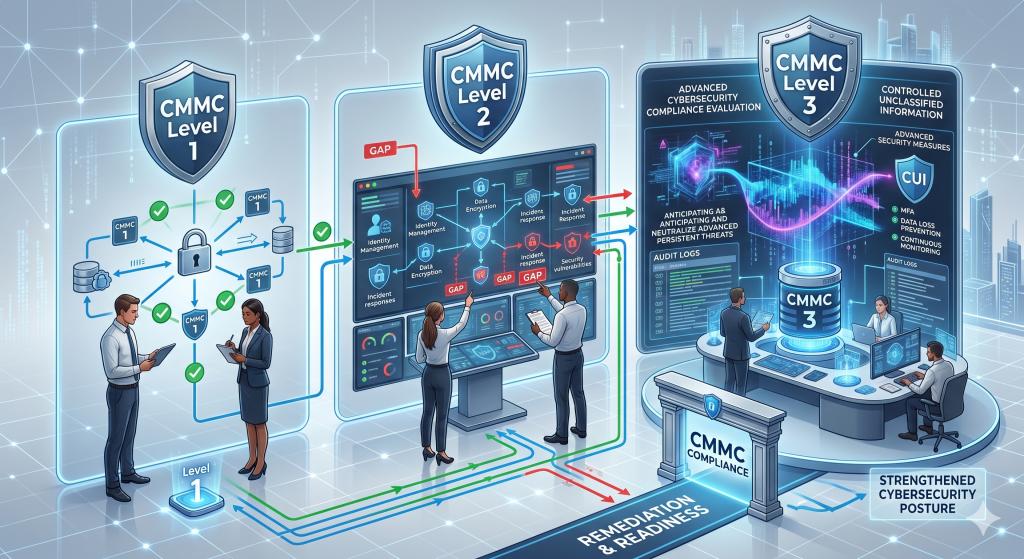
Description:
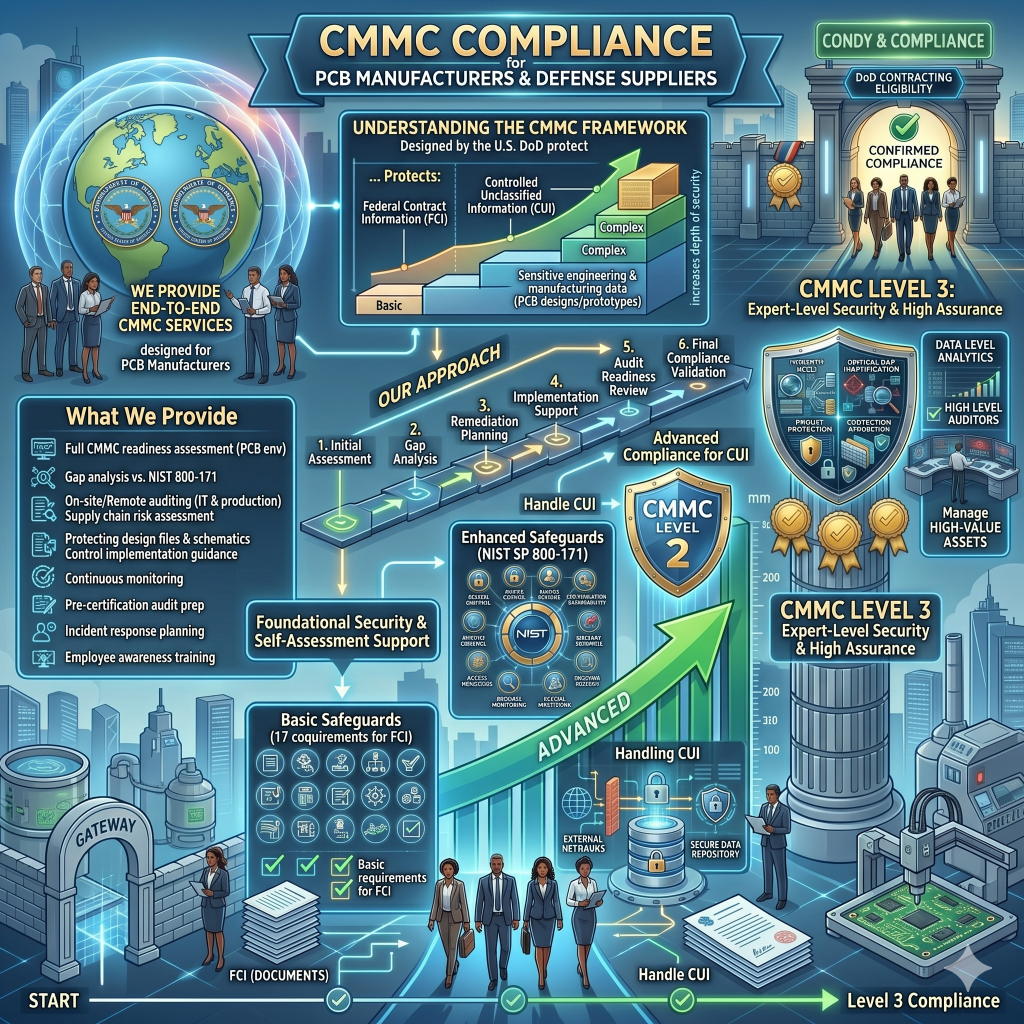
We provide end-to-end CMMC (Cybersecurity Maturity Model Certification) auditing, compliance, and security assessment services specifically designed for PCB manufacturers and organizations supporting U.S. Government and defense supply chains. Our services ensure your systems, processes, and production environments meet strict federal cybersecurity requirements, including handling sensitive defense-related data and intellectual property.
We help PCB companies achieve, maintain, and continuously improve compliance with CMMC standards by identifying risks, strengthening security controls, and guiding you through every step of certification readiness.
What We Provide
- Full CMMC readiness assessment for PCB manufacturing environments
- Gap analysis against NIST 800-171 and DoD cybersecurity requirements
- On-site and remote security auditing of IT and production systems
- Supply chain risk assessment for PCB vendors and partners
- Protection of sensitive design files, schematics, and manufacturing data
- Implementation guidance for cybersecurity controls and policies
- Continuous compliance monitoring and reporting support
- Pre-certification audit preparation and documentation review
- Incident response and risk mitigation planning
- Employee cybersecurity awareness and compliance training
Understanding the CMMC Framework
The Cybersecurity Maturity Model Certification (CMMC) is a framework developed by the U.S. Department of Defense (DoD) to ensure that contractors and manufacturers working with sensitive defense information follow strict cybersecurity standards.
It is designed to protect:
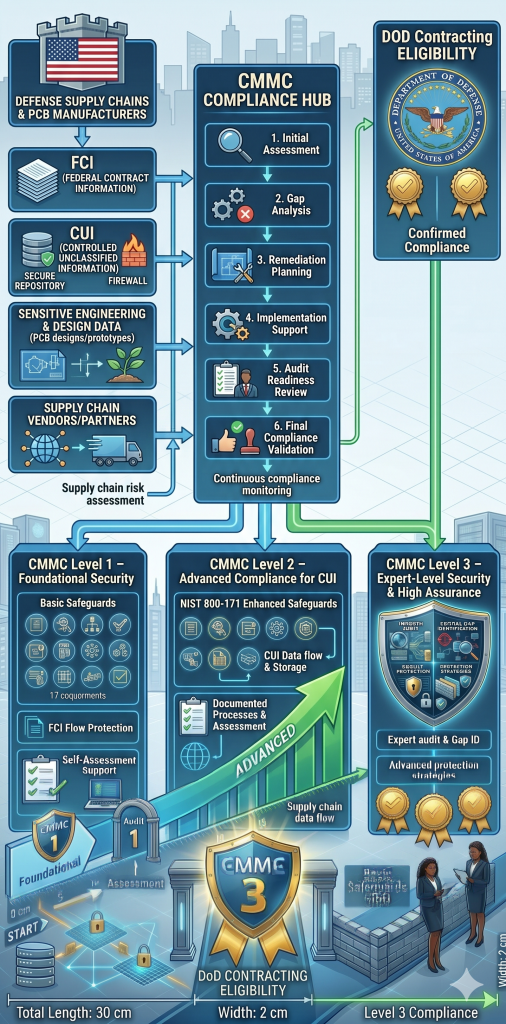
- Federal Contract Information (FCI)
- Controlled Unclassified Information (CUI)
- Sensitive engineering and defense manufacturing data (including PCB designs and prototypes)
The framework is structured in maturity levels that define how securely an organization handles data and cyber risks. Each level builds on the previous one, increasing the depth of security practices, documentation, and process maturity.
Our Approach
- Initial Assessment – Understand your current cybersecurity posture
- Gap Analysis – Identify missing controls and compliance risks
- Remediation Planning – Provide clear steps to close security gaps
- Implementation Support – Guide security control deployment
- Audit Readiness Review – Prepare documentation and evidence
- Final Compliance Validation – Ensure readiness for certification audits
We help PCB organizations align their systems with this framework through:
- Structured assessment of cybersecurity maturity
- Identification of compliance gaps
- Implementation of required controls
- Documentation and audit readiness support
- Continuous improvement planning
CMMC Levels We Support
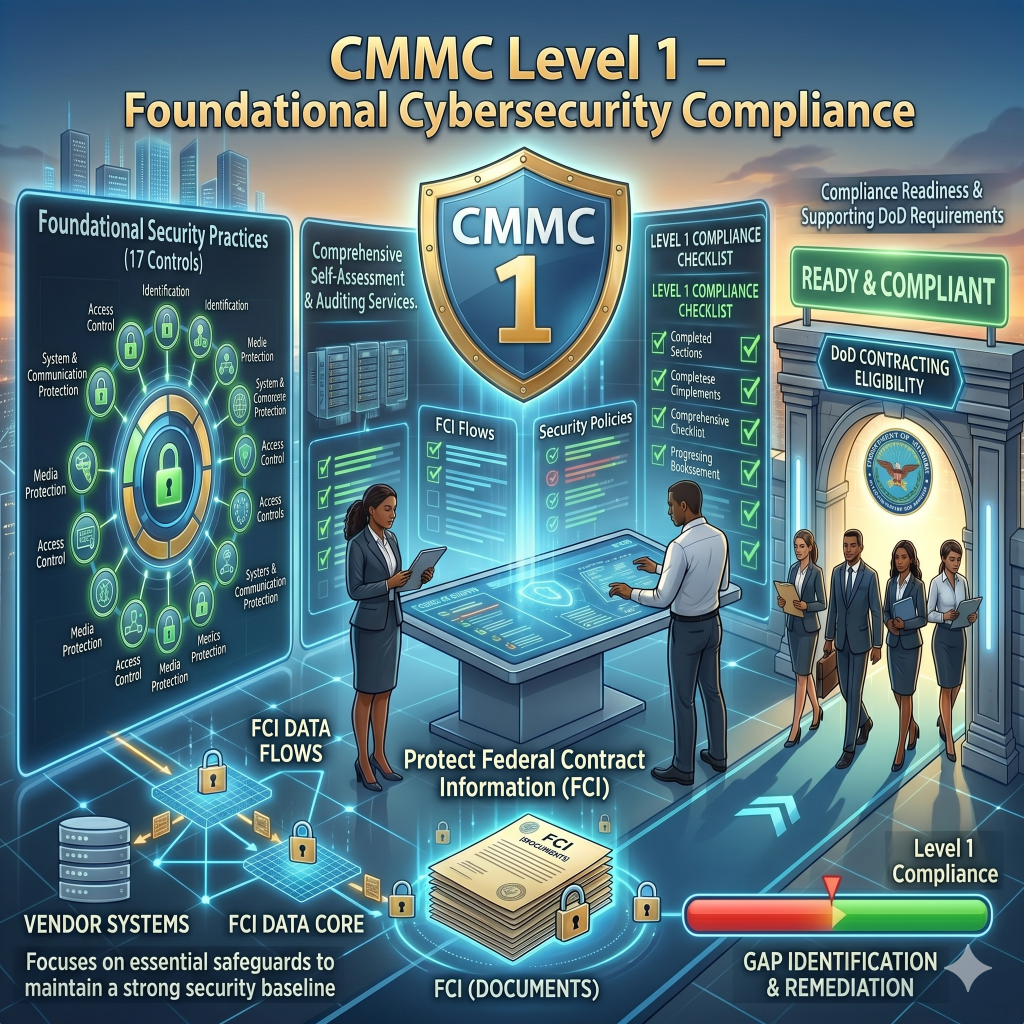
CMMC Level 1 – Foundational Cybersecurity Compliance
Description:
CMMC Level 1 establishes the basic cybersecurity practices required to protect Federal Contract Information (FCI). It focuses on essential safeguards to maintain a strong security baseline across your organization. We provide comprehensive CMMC Level 1 self-assessment and auditing services to help ensure your compliance readiness, identify gaps, and support you in meeting DoD requirements with confidence.
CMMC Level 2 – Advanced Cybersecurity Protection
Description:
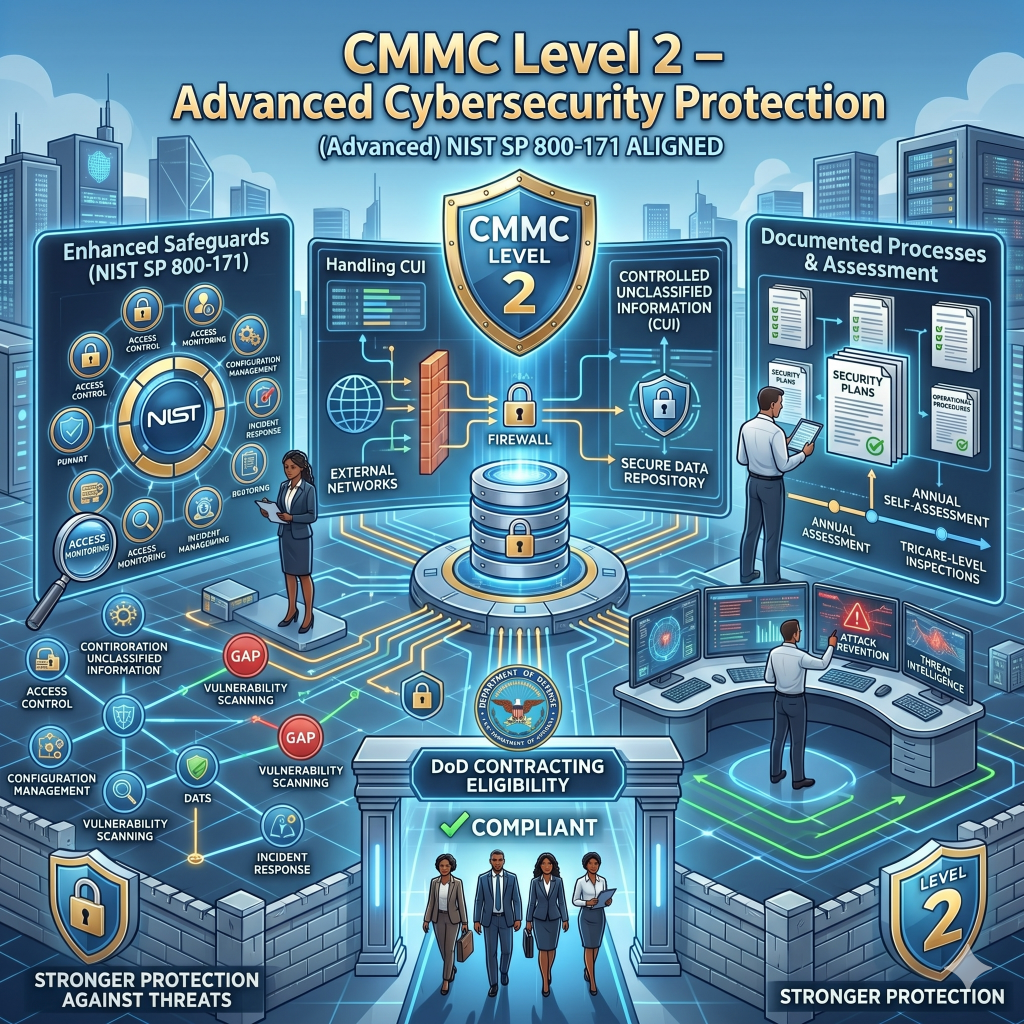
CMMC Level 2 (Advanced) is designed for organizations that handle Controlled Unclassified Information (CUI). It builds on foundational security practices with enhanced safeguards aligned to NIST SP 800-171. This level requires documented processes and consistent implementation of cybersecurity controls to ensure stronger protection against cyber threats and to meet U.S. Department of Defense contracting requirements.
CMMC Level 3 Advanced Cybersecurity Compliance Services
Description:
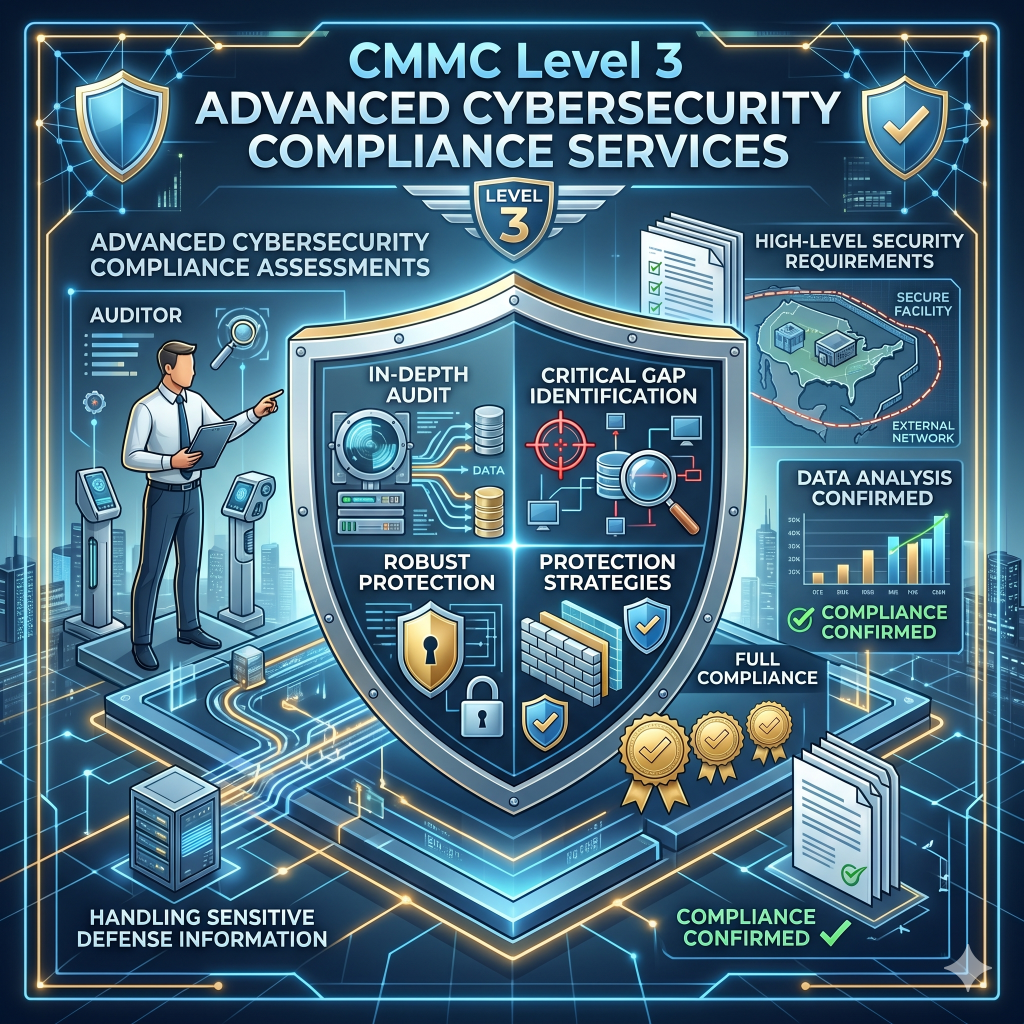
CMMC Level 3 services provide advanced cybersecurity compliance assessments for organizations handling sensitive defense information. We deliver in-depth audits, identify critical security gaps, and implement robust protection strategies to ensure full compliance with high-level security requirements and continuous improvement.